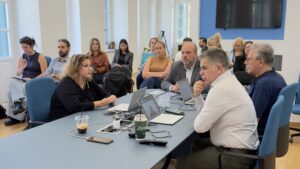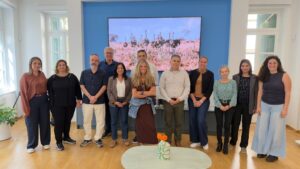
40 participants from 16 EU Member States met to exchange knowledge, address welfare challenges, and explore practical approaches to fish welfare inspections.
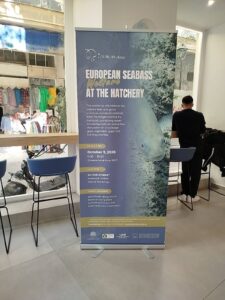
On 9 October 2026, EURCAW-Aqua organised a hybrid workshop in Athens entitled “European Seabass Welfare at the Hatchery: Welfare Risks and Good Practices for Broodstock, Larvae and Fry, Including Live Transport.”
The event brought together representatives of National Competent Authorities, official veterinarians, researchers and animal welfare experts, providing a platform for scientific exchange and practical discussion.
Distinguished opening addresses
The workshop opened with addresses by Dr Spyridon Protopsaltis, Secretary General of the Greek Ministry of Rural Development and Food, and Dr Katerina Marinou, Chief Veterinary Officer of Greece. Both highlighted the importance of translating scientific knowledge into practical guidance to support producers and official inspectors.
Prof. Michail Pavlidis (University of Crete / EURCAW-Aqua) welcomed participants and introduced the Centre’s mission and ongoing activities in support of competent authorities.
Expert insights into key welfare challenges
The scientific programme featured presentations by:
- Dr Konstantinos Mylonas, Director of the Institute of Marine Biology, Biotechnology and Aquaculture at the Hellenic Centre for Marine Research, who addressed broodstock welfare, reproductive management and associated welfare risks.
- Leonidas Papaharisis (University of Crete / EURCAW-Aqua), who explored welfare risks and good practices throughout the live transport of European seabass fry, from preparation and loading to post-transport monitoring.
- Dr Amedeo Manfrin, Senior Veterinary Officer at the Istituto Zooprofilattico Sperimentale delle Venezie (IZSVe, Italy), who shared insights into inspection tools and training needs from an Italian competent-authority perspective.
- Dr Kallirroi Papadaki (EURCAW-Aqua) moderated the interactive discussion, encouraging participants to exchange views on key welfare challenges, knowledge and legislative gaps, and priorities for future training and guidance.
From scientific knowledge to practical action
The interactive discussions focused on practical challenges faced by competent authorities, including mortality and biomass assessment, inspection checklist development, legal requirements and training priorities.
Participants highlighted the need for clearer guidance, more consistent welfare assessment approaches and targeted training for inspectors and industry professionals.
The workshop reinforced the importance of collaboration among scientists, competent authorities, and other stakeholders to advance science-based fish welfare practices and support effective official controls across Europe.
EURCAW-Aqua warmly thanks the distinguished representatives of the Greek authorities, all speakers and participants for their valuable contributions and active engagement.